Interviewed by Emily Bowie on December 9, 2012, COP 17, Durban, South Africa
Category: ENGO
Interviewed by Emily Bowie on December 9, 2012, COP 17, Durban, South Africa
Interviewed by Elena Capaldi on December 7, 2011, COP 17, Durban, South Africa
David Turnbull, Director of CAN International, discusses the key issues of the climate negotiations, namely a second commitment of the Kyoto Protocol, long term cooperative action, and climate funding. He claims there is a more masked issue of ambition and calls for delegates to match policy with science. He believes that without a second period of the Kyoto Protocol there cannot be a good overall outcome at the conference. He then discusses USA ambition and calls for more action like the Tar sands protests of Fall 2011.
Interviewed by the Claire Tighe on December 7, 2011, COP 17, Durban, South Africa
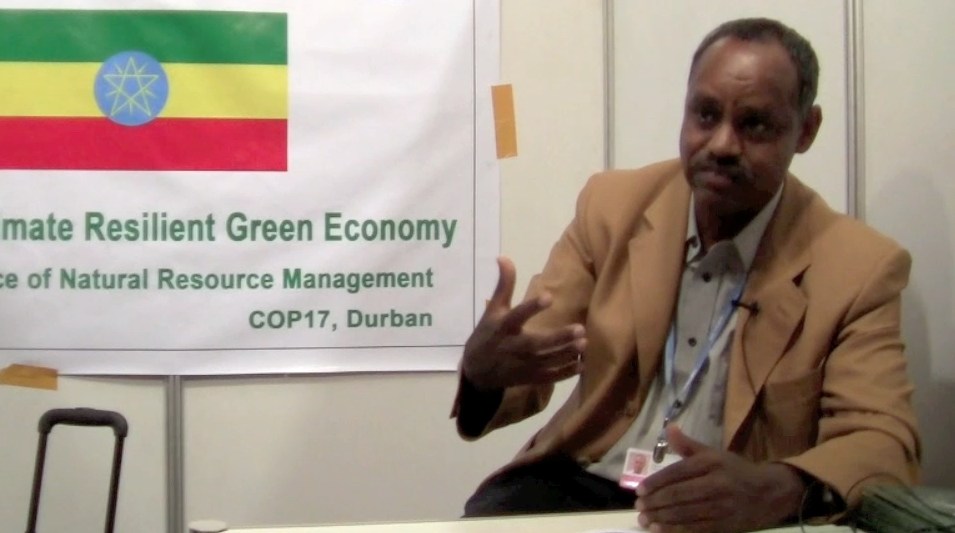
Mr. Negash Teklu from Ethiopia, Executive Director of Population, Health, Environment (PHE) Consortium Ethiopia and COP 17 Party Member to Ethiopia, discusses how climate change is affecting the environment in Ethiopia and East Africa in general and how these changes are negatively affecting poverty levels. He also discusses the hope Ethiopia has for the COP and the second period of the Kyoto Protocol.
Interviewed by Emily Bowie on December 6, 2011, COP 17, Durban, South Africa
Mr. Negash Teklu from Ethiopia, Executive Director of Population, Health, Environment (PHE) Consortium Ethiopia and COP 17 Party Member to Ethiopia, discusses the adaptation knowledge that local communities in East Africa possess and the need for governments, civil society and the private sector to engage the local communities and utilize this knowledge for adapting to climate change.
Interviewed by Emily Bowie on December 6, 2011, COP 17, Durban, South Africa
Mr. Negash Teklu from Ethiopia, Executive Director of Population, Health, Environment (PHE) Consortium Ethiopia and COP 17 Party Member to Ethiopia, discusses the activities of PHE-Ethiopia including pilot sites, social research and workshops. He then explains the sources and system of funding for the organization.
Interviewed by Emily Bowie on December 6, 2011, COP 17, Durban, South Africa
Mr. Tetteh Hormeku, Programme Officer for the Third World Network’s Africa Secretariat, discusses the Africa Group and their hopes for the negotiations. These hopes include a second commitment priod for the Kyoto Protocol and greater developed country responsibility. He explains the reasons that African countries have decided to work together to push their agendas these reasons include, among others, ecosystem vulnerability as well as economic vulnerability.
Interviewed by Anna McGinn on December 5, 2011, COP 17, Durban, South Africa
Dr. Kevin C. Urama, Executive Director of the African Technology Policy Studies Network (ATPS), voices his desire for the government’s of the world to wise up and save the planet. He calls for a legally binding agreement and praises the knowledge sharing occurring at COP 17 between countries. Urama then explains that African adaptation initiatives are coming from multiple actors, the most interesting being rural farmers who are forced to adapt out of necessity. He says funding for these activities comes from multiple relationships – mainly bilateral international and national agencies. He calls for the private sector to invest in adaptation initiatives because governments cannot fund it forever and, he claims, they could make business out of it.
Interviewed by Emily Bowie on December 5, 2011, COP 17, Durban, South Africa
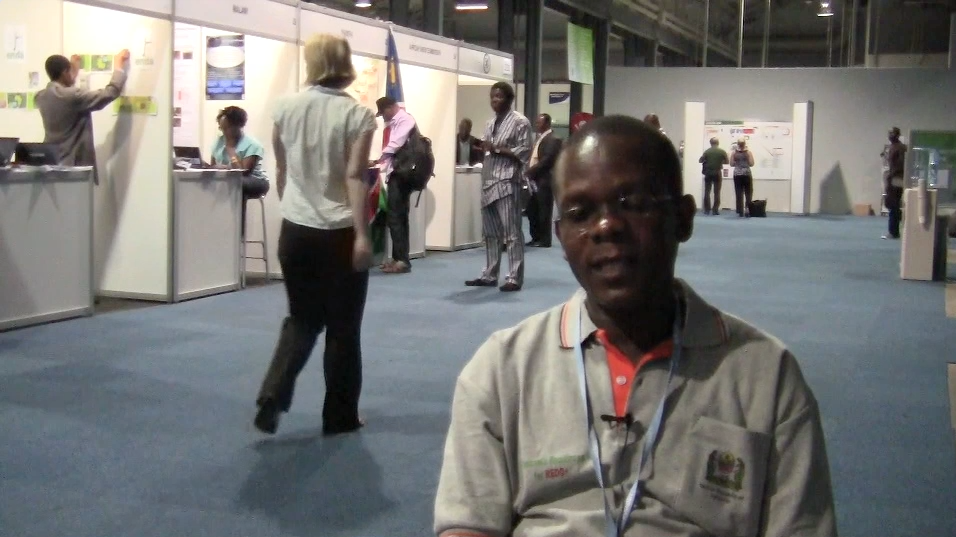
Mr. Charles K. Meshack, Executive Director at Tanzania Forest Conservation Group, discusses Tanzania’s postion in the COP 17 negotiations. He says the country wants to call attention to issues other than REDD that are further behind in progress, including adaptation, technology transfer and financing. Tanzania is pushing for these initiatives because climate change in the country is real and rural people are already seeing the effects. Ultimately, the country is looking for technology and capacity building to develop sustainably and decrease climate vulnerability.
Interviewed by Anna McGinn and Samuel Pollan on December 1, 2011, COP 17, Durban, South Africa
Mr. Charles K. Meshack, Executive Director at Tanzania Forest Conservation Group, discusses the structure and goals of REDD+ in Tanzania and the social impacts of the program, including monetary issues. He also discusses the relationship between REDD+ and local communities and counters the common perception that REDD+ is designed to take resources away from local people.
Interviewed by Anna McGinn and Samuel Pollan on December 1, 2011, COP 17, Durban, South Africa
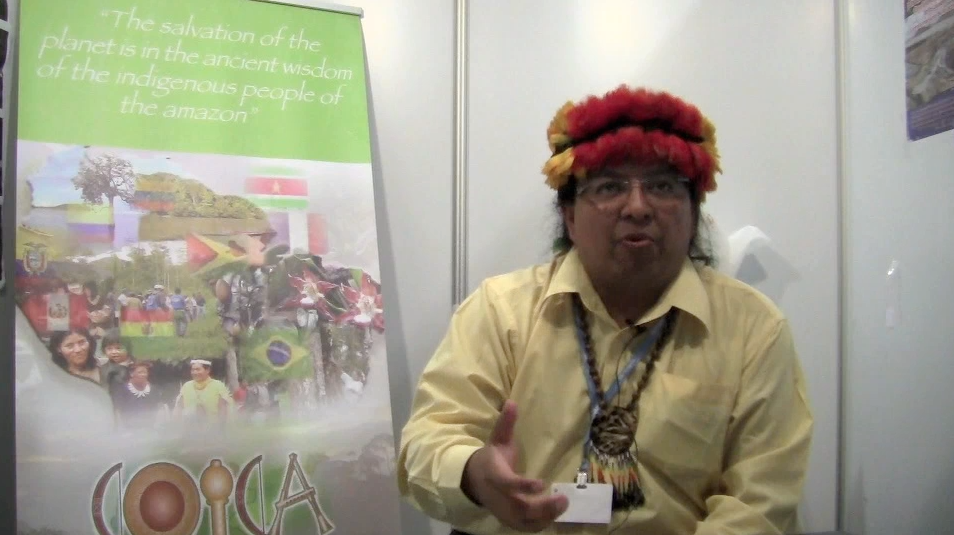
Mr. Juan Carlos Jintiach, Coordinator in the Field of International Economic Cooperation and Autonomous Development with Identity for the Coordinator of Indigenous Organizations of the Amazon Basin (CORCA), discusses the relationship between the indigenous people of the Amazon and REDD efforts. He also discusses the activities of CORCA, his expectations for the COP and his belief that civil society involvement is the key to moving the negotiations forward.
Interviewed by Samuel Pollan on December 1, 2011, COP 17, Durban, South Africa
Dr. Saleemul Huq, Senior Fellow at the International Institute for Environment and Development Climate Change Group, explains the role of vulnerable countries in the negotiations under three main groups: AOSIS, LDCs and the African Group. He continues to explain what these countries should aspire to do in the face of no binding agreement.
Interviewed by Esther Babson, Anna McGinn, Maggie Rees and Claire Tighe on November 30, 2011, COP 17, Durban, South Africa
Dr. Saleemul Huq, Senior Fellow at the International Institute for Environment and Development Climate Change Group, discusses how climate change will severely affect the development of poor countries in the near future. He says in the long term, however, China and the United States will begin to compete for integrating sustainability into what he says will be the new economy. Huq believes it will be competition, not negotiations, that will eventually drive the transition into a green economy. However, he describes the necessity for the issue to still be solved as a global challenge because it is in essence a global problem. Finally, he emphasizes the ever-pressing need for on the ground action.
Interviewed by Esther Babson, Anna McGinn, Maggie Rees and Claire Tighe on November 30, 2011, COP 17, Durban, South Africa
Dr. Saleemul Huq, Senior Fellow at the International Institute for Environment and Development Climate Change Group, names the most critical issues at the 17th Conference of the Parties to be a second period for the Kyoto Protocol and the construction of the Green Climate Fund. He names setting up the adaptation tract and working on the texts for the NAPs, REDD+ and technology transfer as the smaller and more likely to be solved issues. He then explains how likely he believes it is for conclusions to be met on these issues.
Interviewed by Esther Babson, Anna McGinn, Maggie Rees and Claire Tighe on November 30, 2011, COP 17, Durban, South Africa
Dr. Saleemul Huq, Senior Fellow at the International Institute for Environment and Development Climate Change Group, explains the Green Climate Fund and its history as well as its future in the current conference and beyond.
Interviewed by Esther Babson, Anna McGinn, Maggie Rees and Claire Tighe on November 30, 2011, COP 17, Durban, South Africa
Mr. Abias Huongo of the Angola delegation, founder and president of Angola’s biggest environmental organization Juventude Ecologica d’ Angola, discusses Angola’s interest in a second commitment of the Kyoto Protocol, long term finance, capacity building and technology transfer. He points out other countries that have similar and differing perspectives from Angola’s.
Interviewed by Esther Babson and Christine Burns on November 29, 2011, COP 17,
Mr. Tiana Ramahaleo from the Madagascar delegation and World Wildlife Fund discusses Madagascar’s alarming vulnerabilities to climate change, both in biodiversity and livelihoods. He then describes the critical issues that the delegation from Madagascar is following at COP 17.
Interviewed by Anna McGinn on November 29, 2011, COP 17, Durban, South Africa