Interviewed by Emily Bowie on December 9, 2012, COP 17, Durban, South Africa
Tag: adaptation
Interviewed by Claire Tighe on December 9, 2011, COP 17, Durban, South Africa
Interviewed by Emily Bowie on December 9, 2012, COP 17, Durban, South Africa
Interviewed by Elena Capaldi on December 7, 2011, COP 17, Durban, South Africa
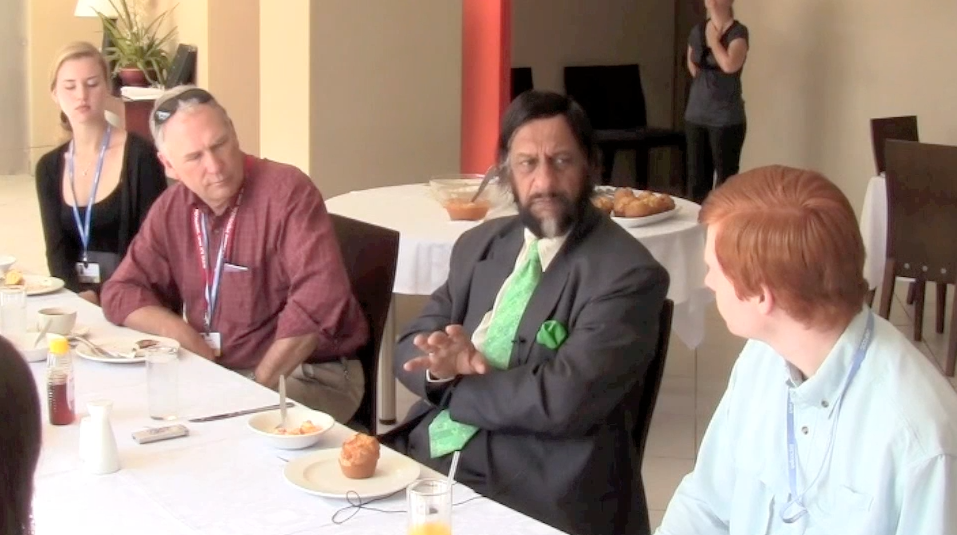
Dr. Rajendra K. Pachauri, Chairperson for the Intergovernmental Panel on Climate Change, discusses how his expectations for COP17 in the areas of REDD, funding, and adaptation have not been met. He explains that if they were met it would mean significant progress for climate change, not necessarily major steps, but something to build on. He expresses a fear for the current level of confidence in the system.
Interviewed by the Dickinson Climate Mosaic on December 7, 2011, COP 17, Durban, South Africa
Dr. Rajendra K. Pachauri, Chairperson for the Intergovernmental Panel on Climate Change, discusses how adaptation is going to take a lot of involvement at the local level with state and national involvement to ensure capacity is built. However, mitigation efforts need to take place at a global level because it is a global issue. He also explains how the IPCC increases local capacity of low development regions to collect climate data and understand how climate change will affect them so they can adapt accordingly.
Interviewed by the Dickinson Climate Mosaic on December 7, 2011, COP 17, Durban, South Africa
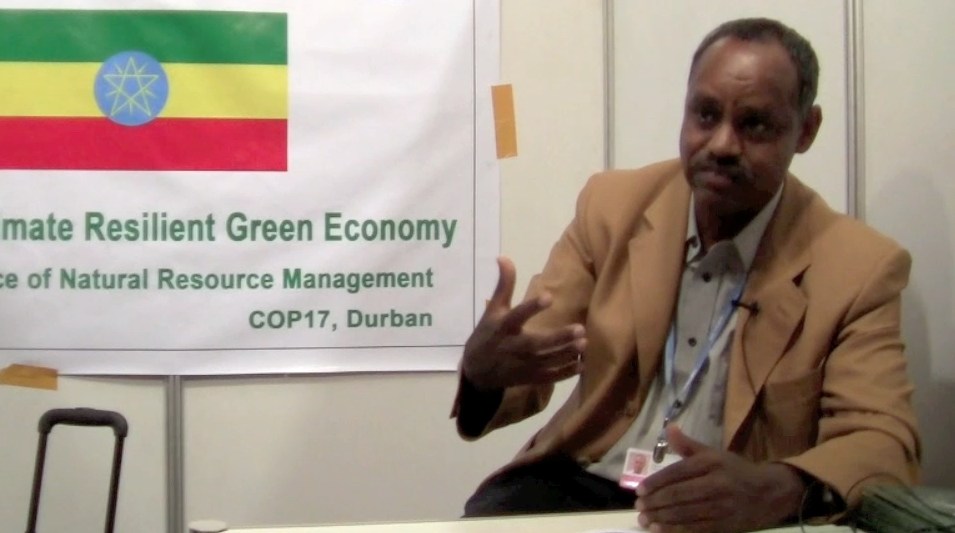
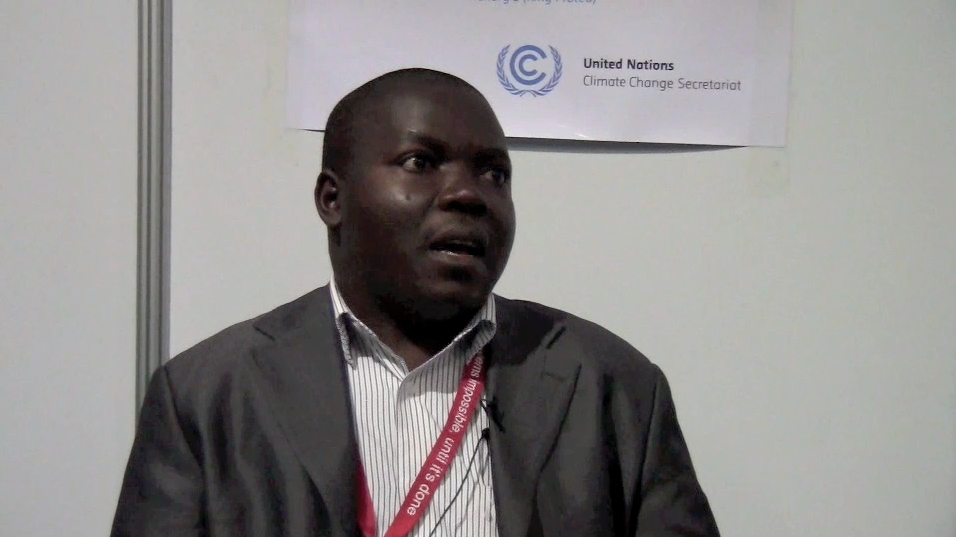
Mr. Negash Teklu from Ethiopia, Executive Director of Population, Health, Environment (PHE) Consortium Ethiopia and COP 17 Party Member to Ethiopia, discusses how climate change is affecting the environment in Ethiopia and East Africa in general and how these changes are negatively affecting poverty levels. He also discusses the hope Ethiopia has for the COP and the second period of the Kyoto Protocol.
Interviewed by Emily Bowie on December 6, 2011, COP 17, Durban, South Africa
Mr. Negash Teklu from Ethiopia, Executive Director of Population, Health, Environment (PHE) Consortium Ethiopia and COP 17 Party Member to Ethiopia, discusses the adaptation knowledge that local communities in East Africa possess and the need for governments, civil society and the private sector to engage the local communities and utilize this knowledge for adapting to climate change.
Interviewed by Emily Bowie on December 6, 2011, COP 17, Durban, South Africa
Mr. Negash Teklu from Ethiopia, Executive Director of Population, Health, Environment (PHE) Consortium Ethiopia and COP 17 Party Member to Ethiopia, discusses the activities of PHE-Ethiopia including pilot sites, social research and workshops. He then explains the sources and system of funding for the organization.
Interviewed by Emily Bowie on December 6, 2011, COP 17, Durban, South Africa
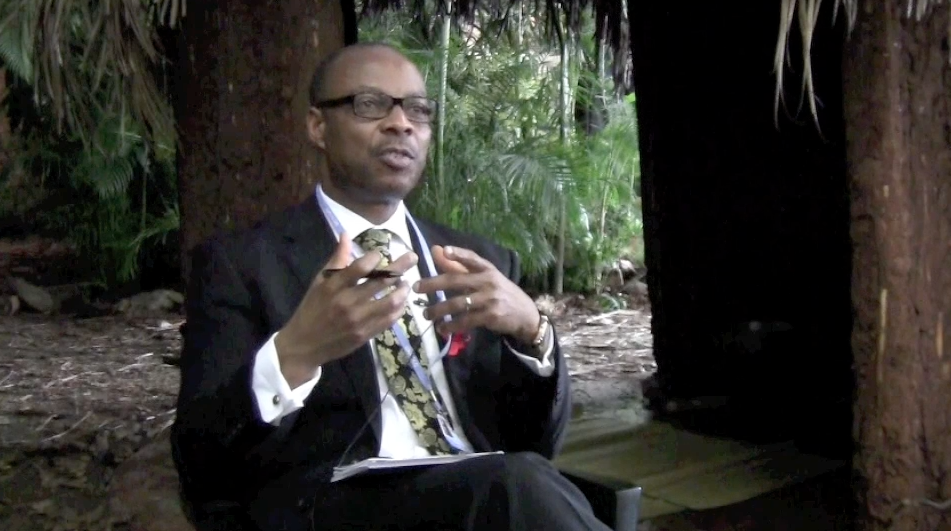
Mayor Ayodele Adebowale Adewale of Lagos, Nigeria discusses Nigeria’s position within the negotiations and a multitude of sustainable initiatives occurring in Lagos, and calls for developed countries to help developing countries adapt and mitigate for the good of the entire planet.
Interviewed by Elena Capaldi and Anna McGinn on December 5, 2011, COP 17, Durban, South Africa
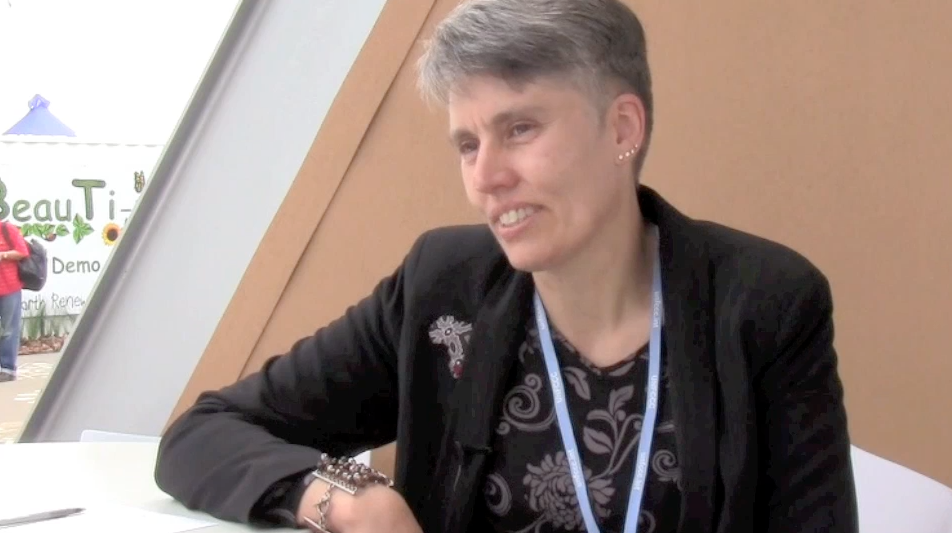
Anna Taylor of the African Center for Cities and the Stockholm Environment Institute discusses South Africa’s position as they move forward with sustainable development after COP 17. She notes poverty and economic inequality as the biggest obstacle for South Africa’s development. Coal as the primary source of energy is also a huge issue as the fuel is one of the dirtiest forms of energy and this will need to change as the country develops. Taylor also notes that the country has rapidly transitioned into a democracy and is still working to make that a reality.
Interviewed by Emily Bowie, Elena Capaldi and Maggie Rees on December 5, 2011, COP 17, Durban, South Africa
Ms. Anna Taylor of the African Center for Cities and the Stockholm Environment Institute discusses her work through both institutions looking at vulnerability and adaptation initiatives. She explains how she is promoting their research, making connections and learning more about climate change. She then explains her hopes for the outcome of the COP and her belief in the need to lead by example. She calls for an end in the negotiations standoff.
Interviewed by Emily Bowie, Elena Capaldi and Maggie Rees on December 5, 2011, COP 17, Durban, South Africa
Dr. Kevin C. Urama, Executive Director of the African Technology Policy Studies Network (ATPS), voices his desire for the government’s of the world to wise up and save the planet. He calls for a legally binding agreement and praises the knowledge sharing occurring at COP 17 between countries. Urama then explains that African adaptation initiatives are coming from multiple actors, the most interesting being rural farmers who are forced to adapt out of necessity. He says funding for these activities comes from multiple relationships – mainly bilateral international and national agencies. He calls for the private sector to invest in adaptation initiatives because governments cannot fund it forever and, he claims, they could make business out of it.
Interviewed by Emily Bowie on December 5, 2011, COP 17, Durban, South Africa
Mr. John Ward, Director of Vivideconomics, discusses the difference between the Adaptation Fund, the Green Climate Fund (GCF) and the Global Environment Facility (GEF), including purposes and sources. He explains the necessity for the GCF separate from the GEF and voices a prediction for the outcome of the conference concerning the GCF.
Interviewed by Emily Bowie on December 1, 2011, COP 17, Durban, South Africa
Mr. John Ward, Director of Vivideconomics, discusses the different sources of funding reserved for adaptation and development initiatives. Development funding is meant to come from the Overseas Development Agency (ODA) while funding for adaptation comes from several sources, some bilateral, some multilateral. He explains the difference between spontaneous and programmed adaptation funding and then explains the “moral” argument around the responsibility of developed countries to pay for adaptation.
Interviewed by Emily Bowie on December 1, 2011, COP 17, Durban, South Africa
Mr. Jean-Marie Kileshye Onema, Democratic Republic of Congo Negotiator and Research Coordinator for the Southern Africa Development Community, discusses his belief that dealing with climate change locally but with a global understanding is the most efficient way. He then explains that differing ideas on who should share the responsibilities of climate change as the reason nations are having difficulties coming up with a plan for climate change.
Interviewed by Christine Burns on December 1, 2011, COP 17, Durban, South Africa
Dr. Tony Nyong, Principle Climate Change Expert at the African Development Bank, discusses how local communities have been adapting to climate forever, but that adaptation to anthropogenic climate changes needs to come from a variety of sources. More specifically, he emphasizes that different planning efforts for adaptation are done at different levels and therefore funding has to come from a variety of places including local, national and international sources. He also talks about the role adaptation is playing at COP 17.
Interviewed by Esther Babson, Emily Bowie, Christine Burns, and Maggie Rees on December 1, 2011, COP 17, Durban, South Africa
Dr. Saleemul Huq, Senior Fellow at the International Institute for Environment and Development Climate Change Group, explains the role of vulnerable countries in the negotiations under three main groups: AOSIS, LDCs and the African Group. He continues to explain what these countries should aspire to do in the face of no binding agreement.
Interviewed by Esther Babson, Anna McGinn, Maggie Rees and Claire Tighe on November 30, 2011, COP 17, Durban, South Africa
Interviewed by Maggie Rees on November 28, 2011, COP 17, Durban, South Africa